Detect and debug customer experience issues early with SLOs
Catch critical issues that affect customers before they escalate, and reduce alert fatigue with actionable Service Level Objectives (SLOs). Honeycomb SLOs turn any system, deterministic or not, into a clear signal of what’s working and what needs attention.

Why you’ll love Honeycomb
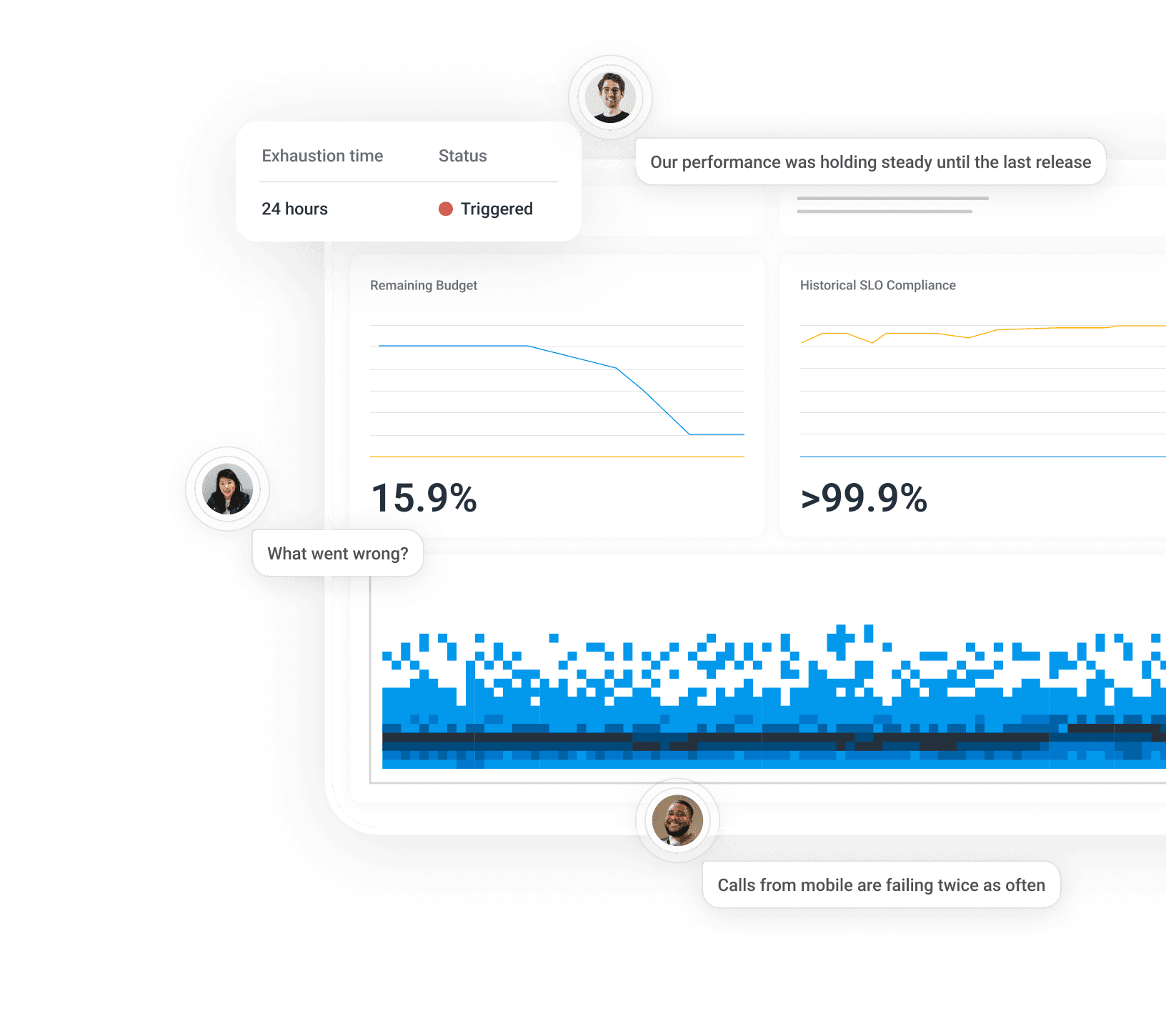
All the context you need to debug
See trends of how your service is performing alongside all the underlying data needed to debug issues.
Get the alerts that matter to your teams
Prevent alert fatigue and resolve issues proactively with notifications that give you the time and context needed to avoid disruptions.
Make the right business decisions
Create SLOs that reflect critical customer experiences, like the checkout flow, and allow you to track agent token usage. Get the clarity to prioritize issues and reduce bottlenecks across teams.
Why use Honeycomb for Service Level Objectives?
Take action faster
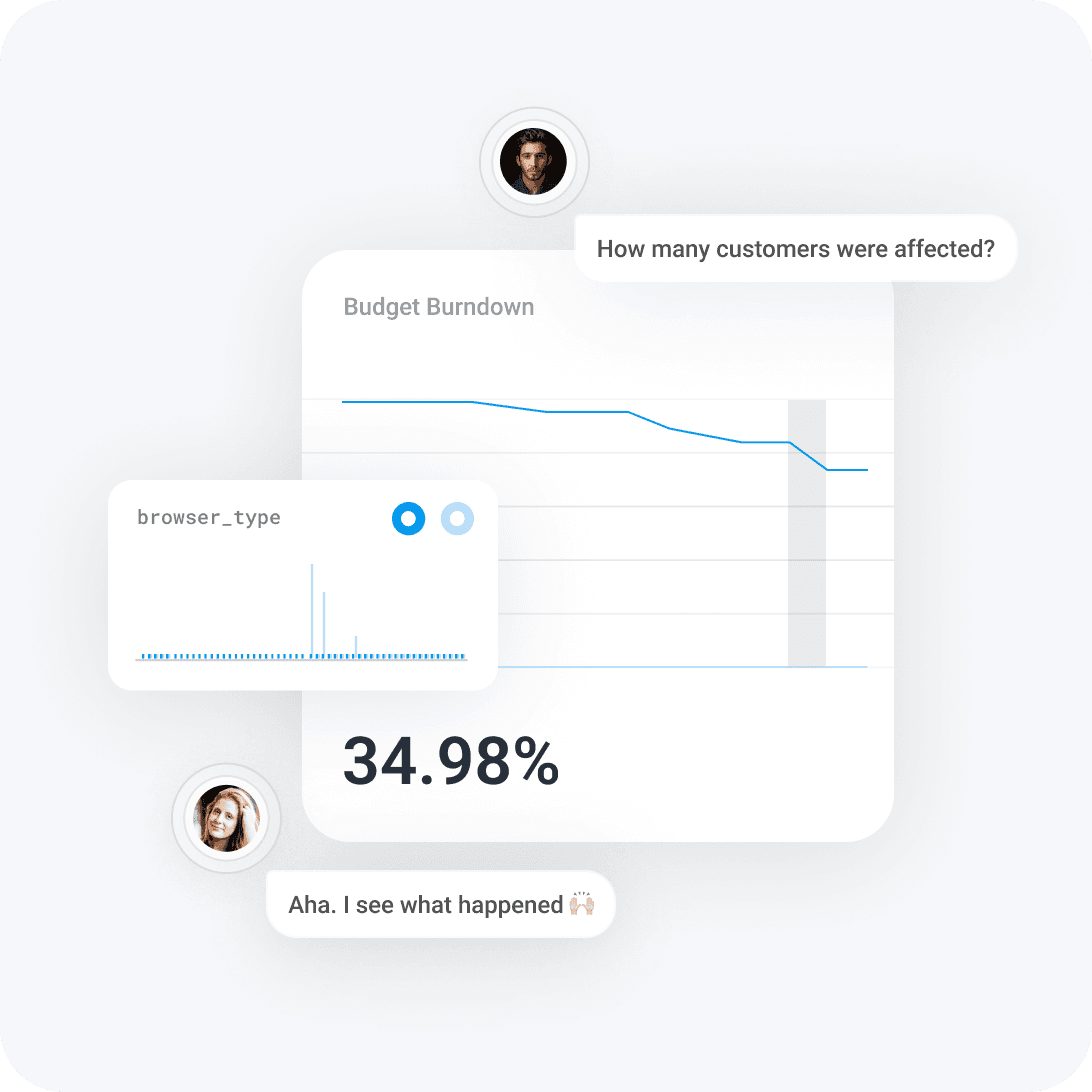
Honeycomb’s event-based SLOs calculate in real time to represent your customer experiences. You can detect anomalies to correlate failures to their root causes, enabling you to see immediate impact and take action quickly. By focusing on individual customer experiences, you’re alerted to severe issues before they escalate.
Notifications with context
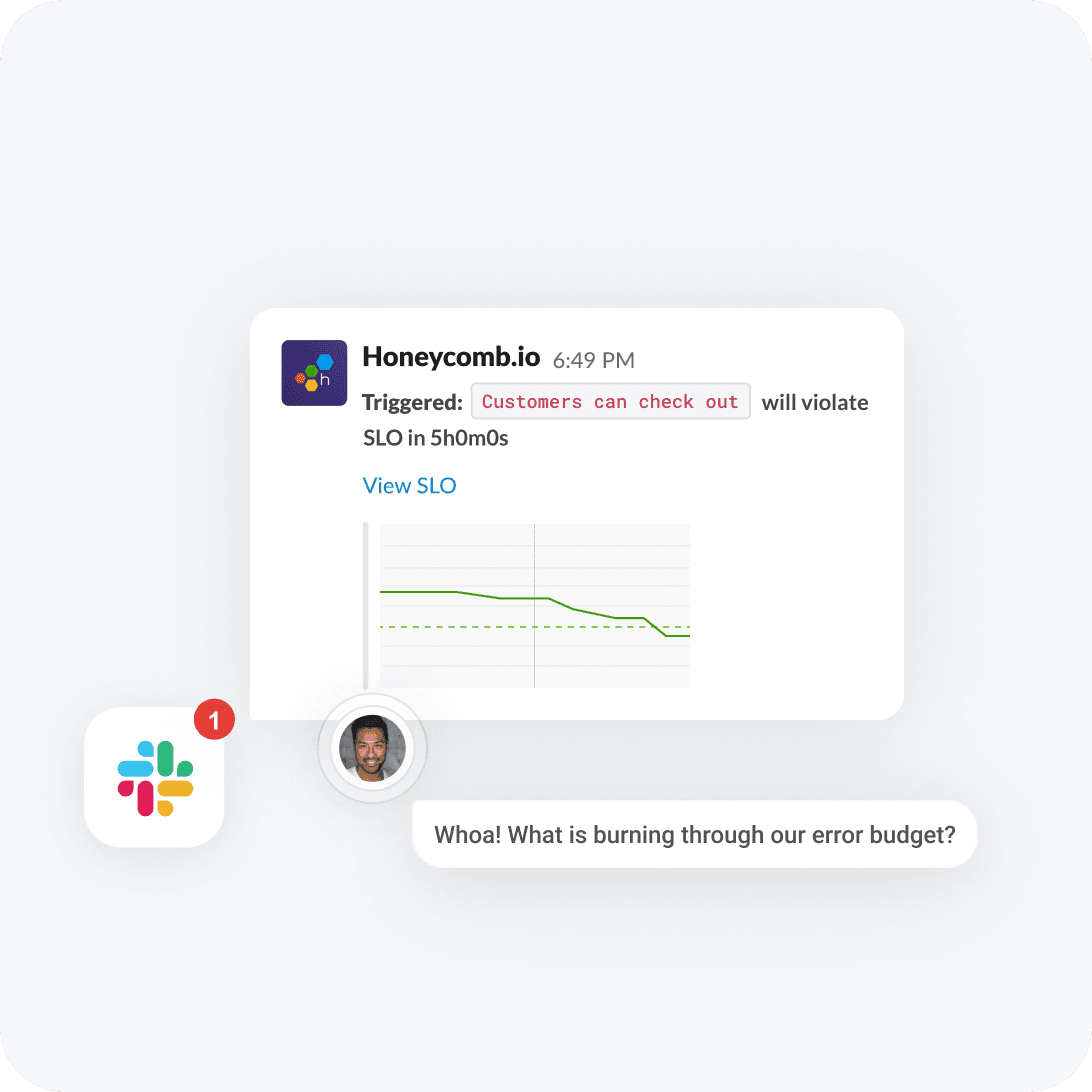
Burn alerts trigger automated Canvas AI investigations, then deliver actionable notifications with full system context, integrating insights from across your environment. These alerts are seamlessly connected to your notification workflows via Slack or escalation workflows in PagerDuty, allowing teams to assess severity and impact quickly and make informed decisions.
Track trends and debug in one UI
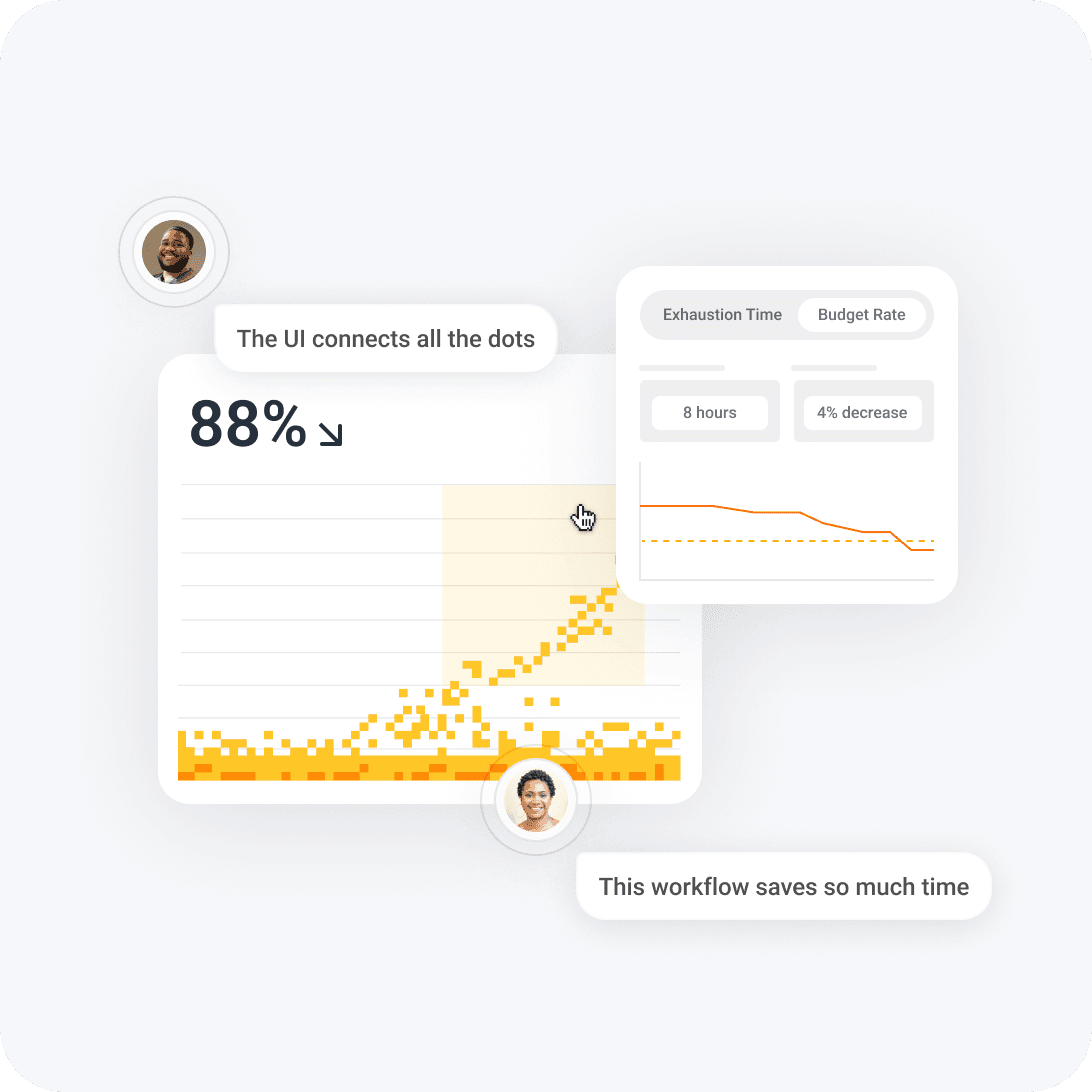
SLOs in Canvas are debuggable within a single UI with all the underlying event data. Engineering teams can quickly dive in to pinpoint issues and their causes without switching tabs. Built-in analysis features like anomaly detection and BubbleUp can help you explore suspicious performance bottlenecks on a heatmap and expose patterns.
Continuous improvement
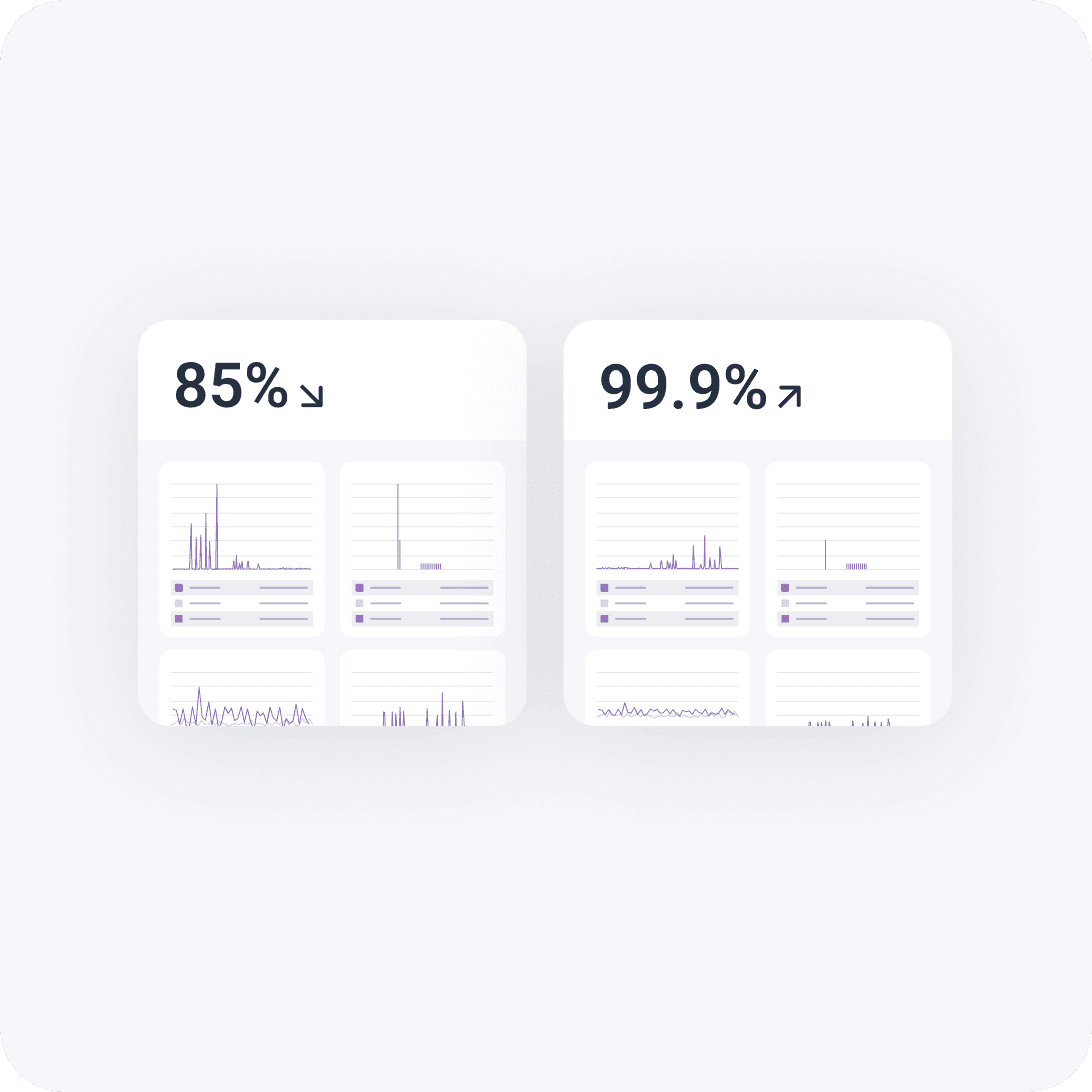
Continuously improve the health of your services and quality of your AI agents by integrating SLOs into custom boards. With real-time visibility into performance, you can align engineering effort with business priorities and turn every burned error budget into a concrete signal for what to fix, tune, or retrain next.
Hear from our community
Honeycomb SLOs give us visibility into the failures that live below the alert threshold. That’s the category of problem we’re focused on solving next.
We want to be the resource customers turn to so we can tell them exactly what they’re seeing. Honeycomb lets us deliver that. We understand what is going on and we can be that authority for our customers.

Introducing Honeycomb SLOs has been a gamechanger for us. They serve as a kind of contract between our product managers and engineers where we jointly define appropriate SLOs for each part of the product and agree that if an SLO isn’t met, it’s an indicator of customer impact. We then halt other work and prioritize resolving the issue.
The Engineer’s Guide to Service Level Objectives (SLOs)
Imagine a world where engineers get more sleep, friction between engineering and management decreases, and your monitoring processes become more efficient and cost-effective. Sounds too good to be true, right? Well, it’s possible with Service Level Objectives (SLOs). Getting started involves a bit more research than just jumping into setting targets.
- The fundamentals of SLOs
- Their benefits
- Best practices for setting them up
- How to align them with business goals
Want to know more?
Talk to our team to arrange a custom demo or for help finding the right plan.