Honeycomb was built for the AI era. Learn how to futureproof your software for what comes next.
Discover why Honeycomb is the better choice for your engineers, your customers, and your bottom line.
Start your journey with the definitive guide to observability. Download our complimentary ebook.
Bring observability to every software engineer.
Learn about our company, mission and values.
Come for the impact, stay for the culture.
See Honeycomb's latest press releases, media, and more
Learn more about becoming a Honeycomb partner.
Already a Honeycomb customer?
Nick Rycar
Feature Focus: September 2022. Here’s a look at improvements we’ve made to Honeycomb in September, including: updates to a buuunch of APIs, new integrations, and Refinery upgrades.
George Miranda
Today, we’re announcing major new updates to Honeycomb’s PagerDuty integration. These updates put more of the information you need into PagerDuty notifications and allow for greater configurability. These enhancements are available to all users who leverage Honeycomb Triggers and Burn Alerts to send notifications via PagerDuty.
Feature Focus: August 2022. Here’s a look at improvements we’ve made to Honeycomb in August, including: better filtering capabilities, derived columns editor, and a new copy button.
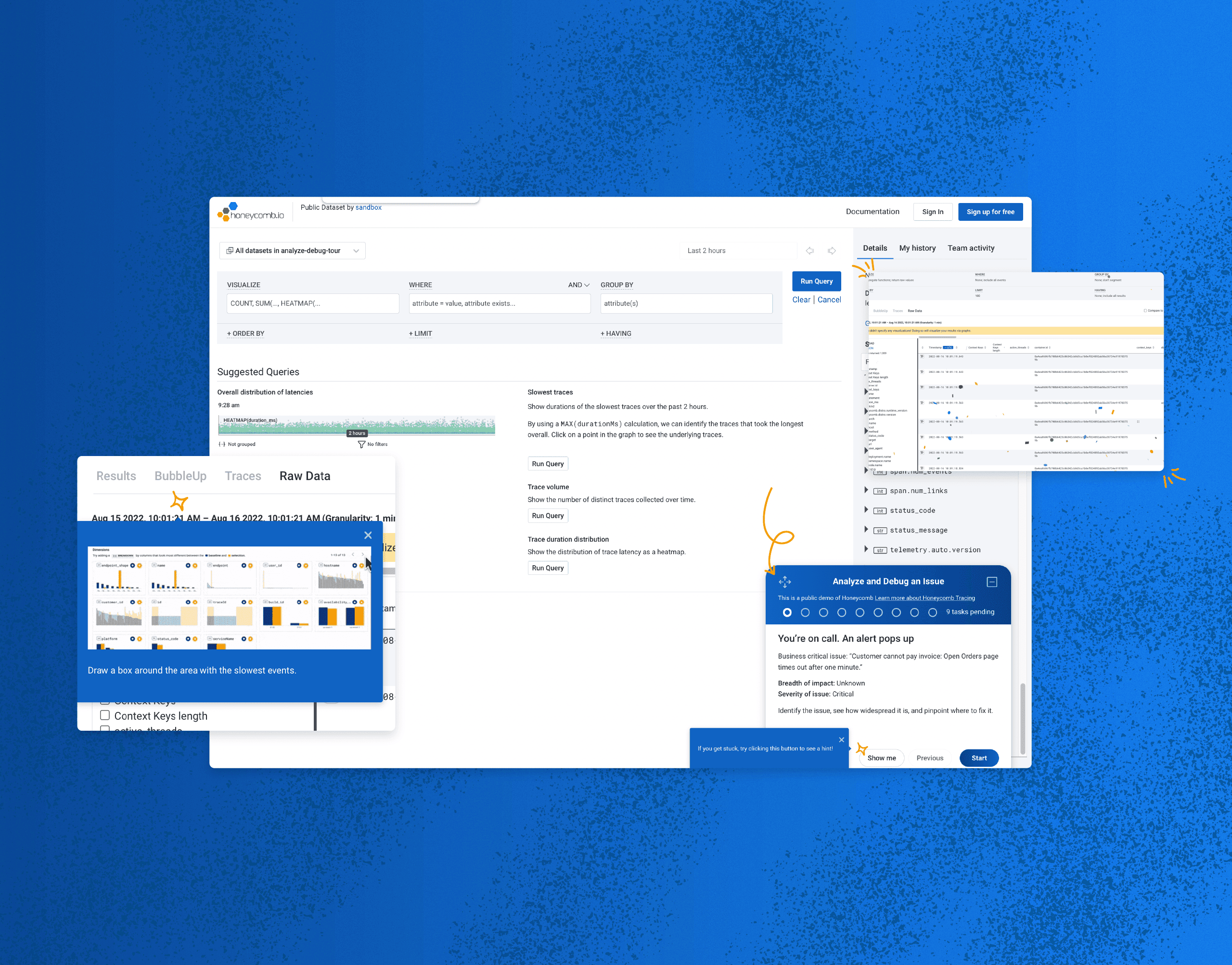
Honeycomb Play is an interactive sandbox that lets users explore Honeycomb’s data-enriched UI through a guided scenario. The hands-on experience takes a deep dive into how Honeycomb enables you to identify issues, assess their impact, and diagnose their causes for remediation.
Danyel Fisher
At Honeycomb Developer Week, I got an opportunity to walk through a couple of fun new features we’ve shipped since August and ways that we’ve been able to improve Honeycomb for you. Hearing feedback…
Ian Wilkes
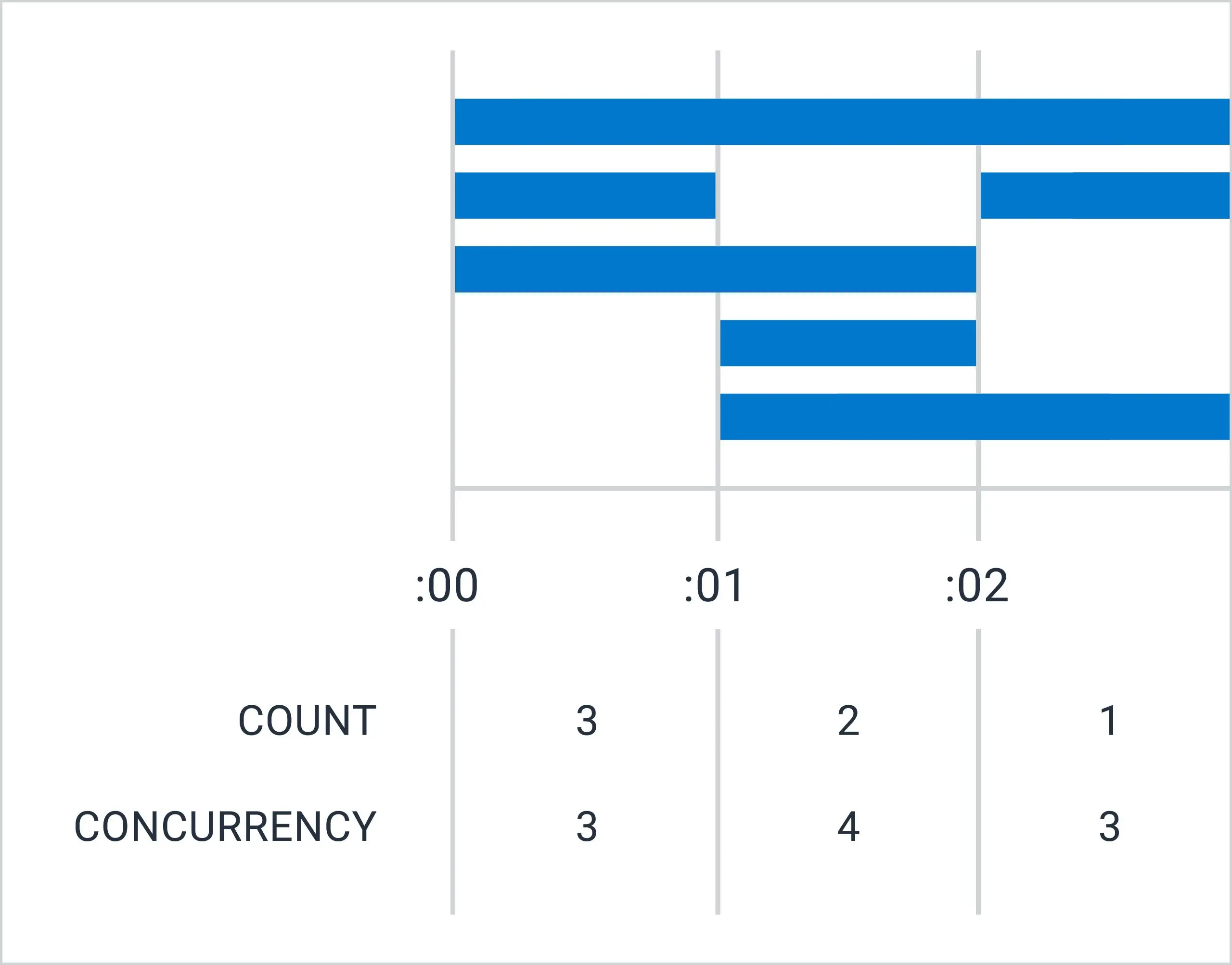
CONCURRENCY is now enabled for all customers. See our docs page for information about how it works and how to use it effectively. Questions or would like to test out CONCURRENCY and Honeycomb? Sign…
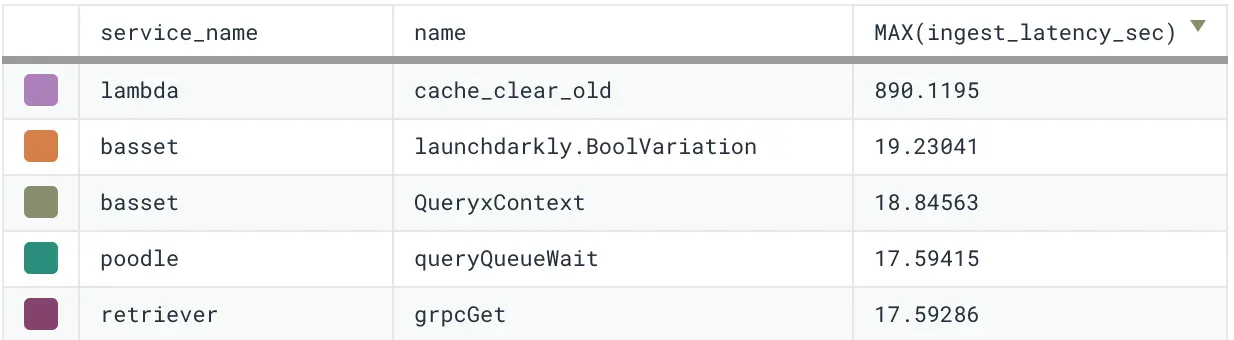
Recently, we added a new derived column function to Honeycomb, INGEST_TIMESTAMP(), which can help customers debug event latency and/or inaccurate timestamps. A meaningful minority of the events sent to Honeycomb are already old when…
A few months ago, Honeycomb released our SLO — Service Level Objective — feature to the world. We’ve written before about how to use it and some of the use scenarios. Today, I’d like…
When we introduced Secondary Storage two years ago, it was a deliberate compromise between economy and performance.
A few weeks ago, BubbleUp came out of Beta. We’ve been getting fantastic user feedback on how BubbleUp helps users speed through the Core Analysis Loop and lets people find things they never could…
In this blog miniseries, I’m talking about how to think about doing data analysis, the Honeycomb way. In Part I, I talked about how heatmaps help us understand how data analysis works. In Part…
Ben Hartshorne
When we release something new, whether it’s a new SDK or Beeline or a new feature in the UI, we’ll often set a Honeycomb Trigger to keep track of its use. Sometimes we don’t…
Get it delivered straight to your inbox.
By subscribing to our newsletter, you agree to Honeycomb’s Terms of Service and Privacy Notice.
Eben Freeman
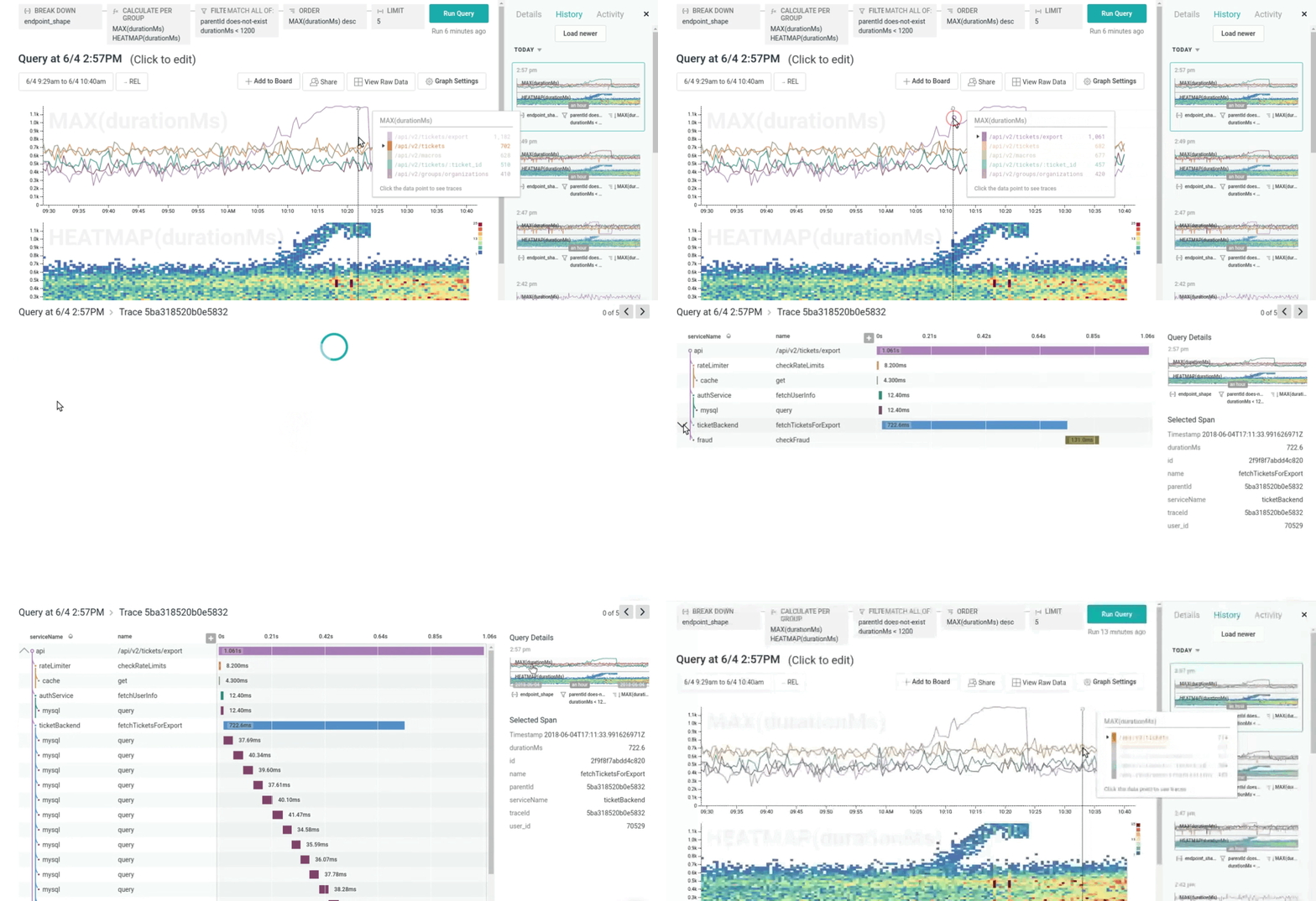
We’re excited to introduce Honeycomb Tracing! Now, you can both: Visualize individual traces to deeply understand request execution, and Break down, filter, and aggregate trace data to uncover patterns, find outliers, and understand historical…
Nathan LeClaire
Here at Honeycomb, we know that you can get big benefits quickly by starting with observability at the edge. No, not that Edge. The other edge. That’s why today we’re pleased to announce the…
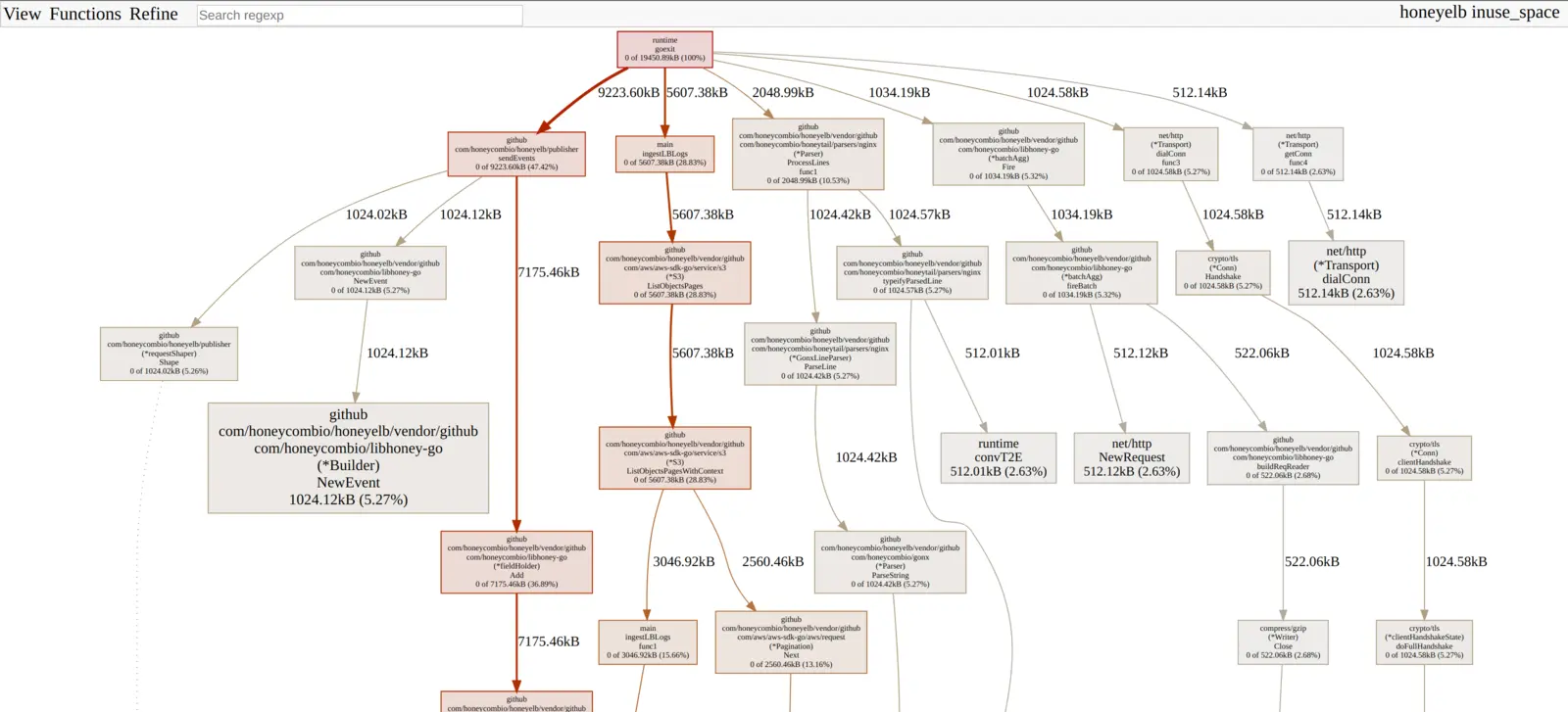
Golang as an Observability Tool Go, for good reason, has become an incredibly popular language for everything from web applications to DevOps tools. We lean on Golang heavily here at Honeycomb, and naturally we…
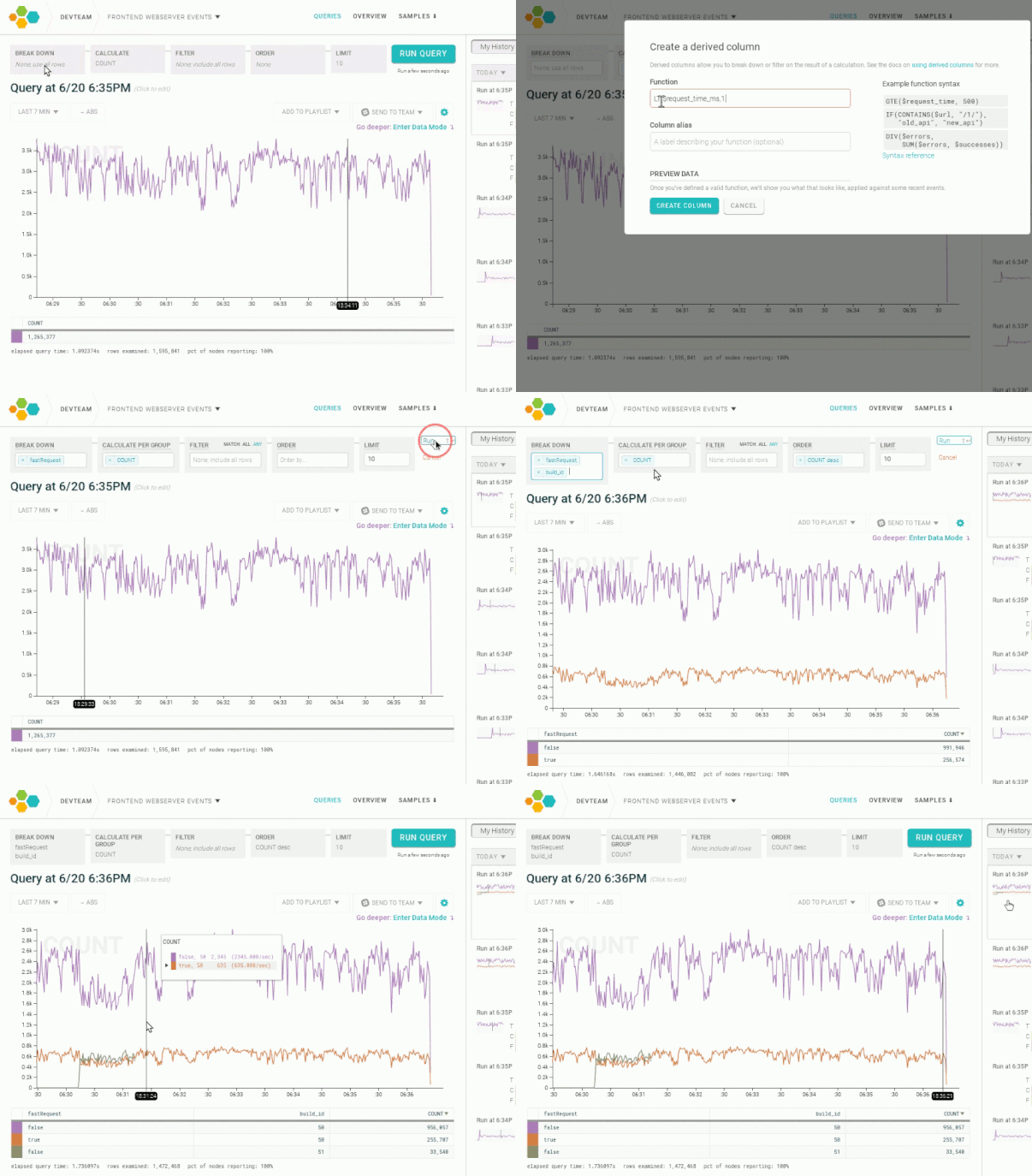
We’re excited to introduce derived columns! Derived columns let you run queries based on the value of an expression that’s computed from the columns in an event, making it easier to answer questions such…
How can you make your nginx logs more awesome? Nginx has some fantastic data hiding in its log_format spec, but oddly enough, most of it is not enabled by default.