See how your apps, services and experiences connect.
Let AI explore production data to resolve issues faster.
Understand agent behavior, performance and cost in production.
Collect, control and route telemetry across your stack.
Maintain reliability and efficiency at enterprise scale.
Explore solutions for specific engineering challenges.
The industries and company sizes Honeycomb supports.
Connect Honeycomb with the technologies across your stack.
See how Honeycomb improves your business and engineering outcomes.
See how teams use Honeycomb to achieve measurable results.
Understand how Honeycomb differs from other approaches.
Elsie Phillips
Quinn Leong
Earlier this year, we introduced relational fields. Relational fields enable you to query spans based on their relationship to one other within a trace, rather than only in isolation. We’ve now expanded this feature…
Over the past six weeks, we introduced a series of impactful updates aimed at making your observability workflows faster, more unified, and more collaborative. Here’s a snapshot of what we worked on.
Winston Hearn
Observability has traditionally been backend-focused, but the frontend is just as hard—if not harder—to debug and has simply outgrown current monitoring tools. Engineers working with the frontend need the ability to see every user interaction with their system—and all the rich context around it. They need observability for the frontend. Today, we’re proud to announce that Honeycomb for Frontend Observability is now generally available.
Priscilla Lam
Setting clear, measurable goals is essential for any successful team. However, aligning those goals with the technical work can be challenging in the fast-paced world of software engineering. Engineers might focus on reducing latency or improving uptime, while business leaders look at revenue and customer satisfaction. It gets tricky to track the impact between the two to justify when specific engineering initiatives are important, why, and how they impact the bottom line. Everyone may feel the work is important, but it’s hard to see or remember why!
Honeycomb for Frontend Observability gives frontend developers the ability to quickly identify opportunities for optimization within their web app. This starts with better OpenTelemetry instrumentation, available as an NPM package, that lets you instrument and collect attribution data on Core Web Vitals in under an hour.
Josephine Yuan
Expanded fields allow you to more easily find interesting traces and learn about the spans within them, saving time for debugging and enabling more curiosity within your team around how transactions perform throughout your services.
Jason Harley
We’re delighted to introduce our new Ingest API Keys, a significant step toward enabling all Honeycomb customers to manage their observability complexity simply, efficiently, and securely. Ingest Keys are currently available for Environment & Services customers, with Classic support and programmatic key management capabilities under development and coming soon!
Rox Williams
At Honeycomb, we are very concerned about privacy and data sovereignty—it’s something we take very seriously, and in an effort to serve our customers better, we’re thrilled to announce that we now offer data residency in Europe.
Natalie Friedman
Today marks an exciting milestone at Honeycomb, and we’re thrilled to share it with you. We officially launched our integration with Microsoft Teams, a step forward in our continuous effort to streamline and enhance your observability experience. Teams now joins our growing list of over 100 Honeycomb integrations.
Fred Hebert
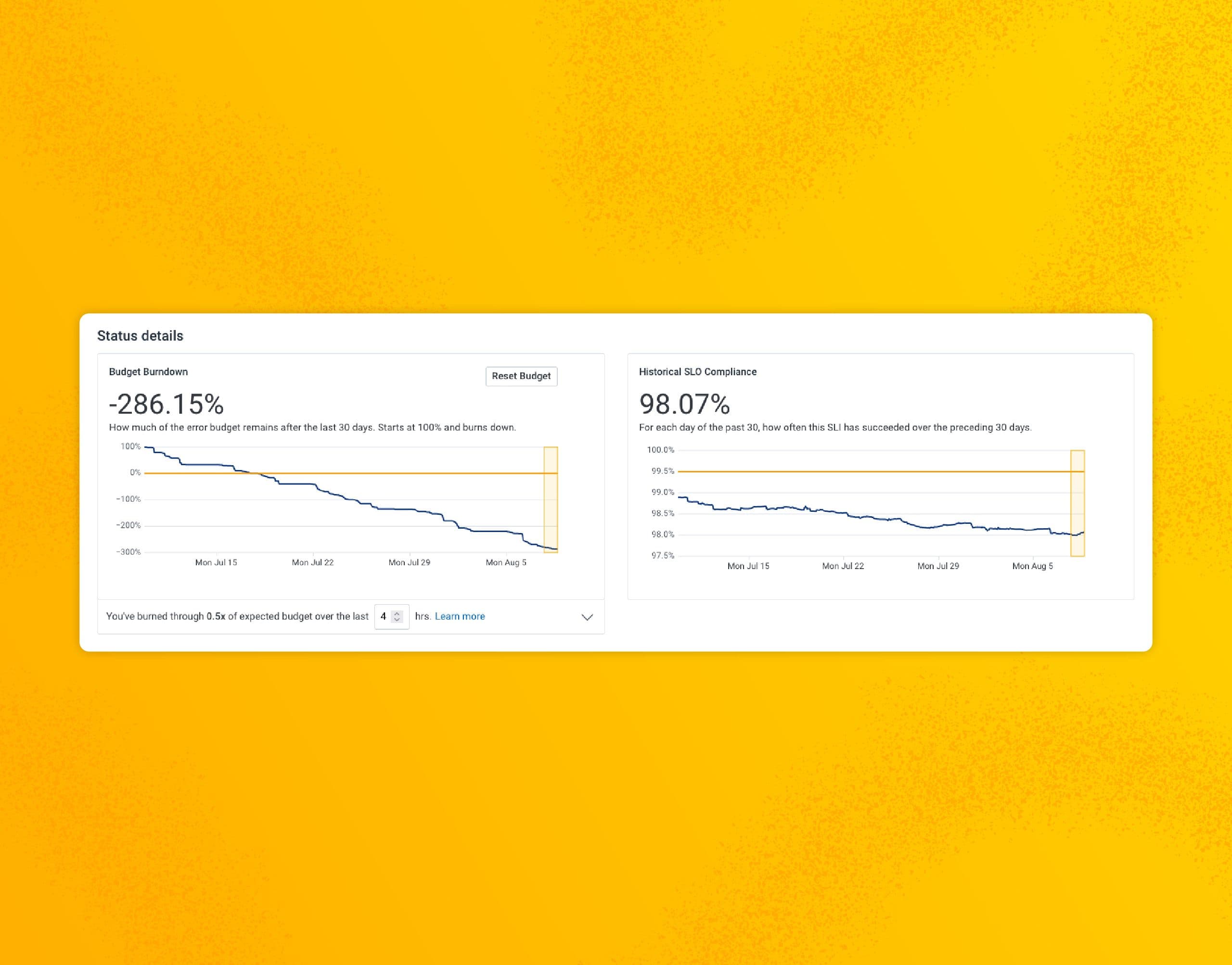
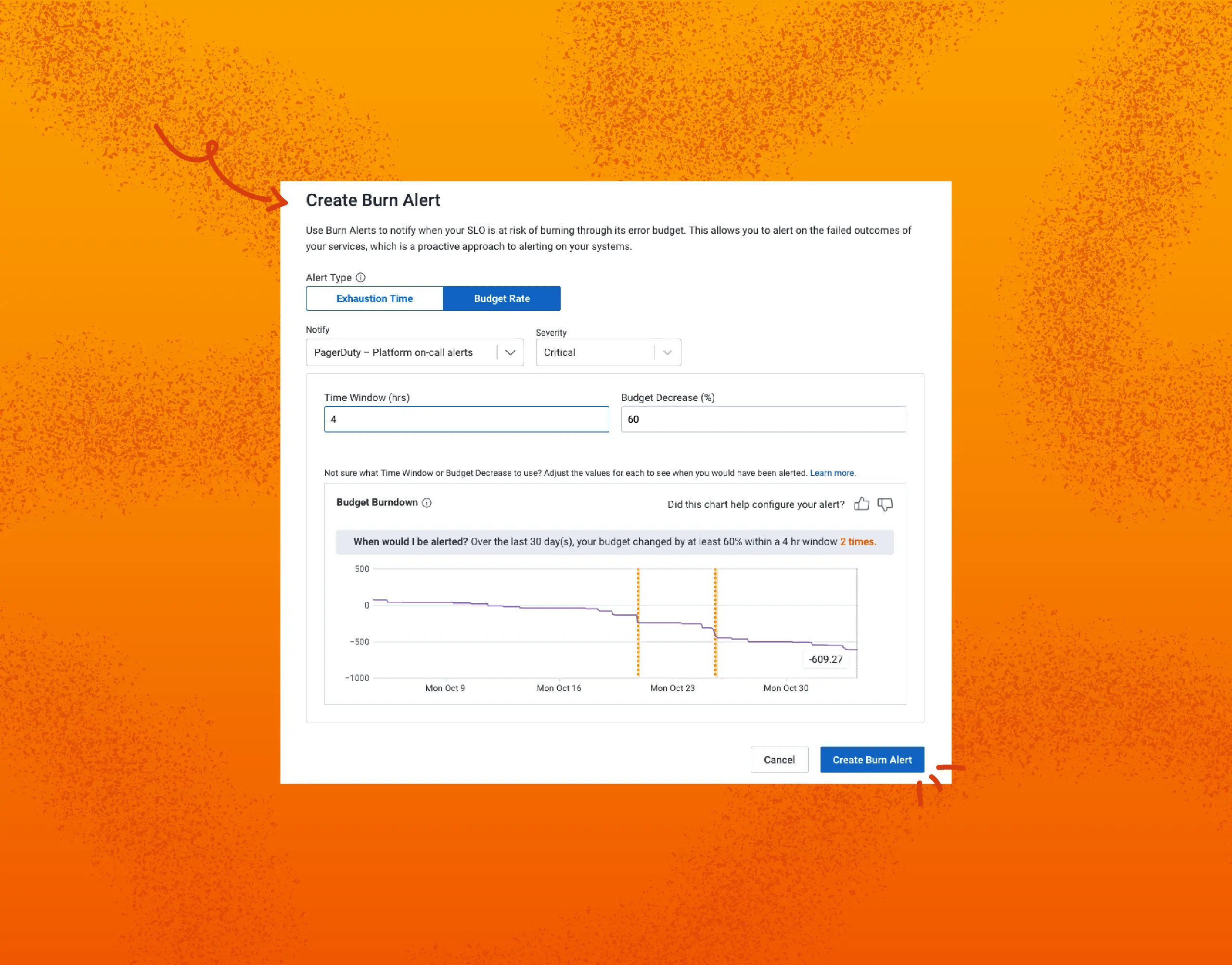
As someone living the Honeycomb ops life for a while, SLOs have been the bread and butter of our most critical and useful alerting. However, they had severe, long-standing limitations. In this post, I will describe these limitations, and how our brand new feature, budget rate alerts, addresses them.
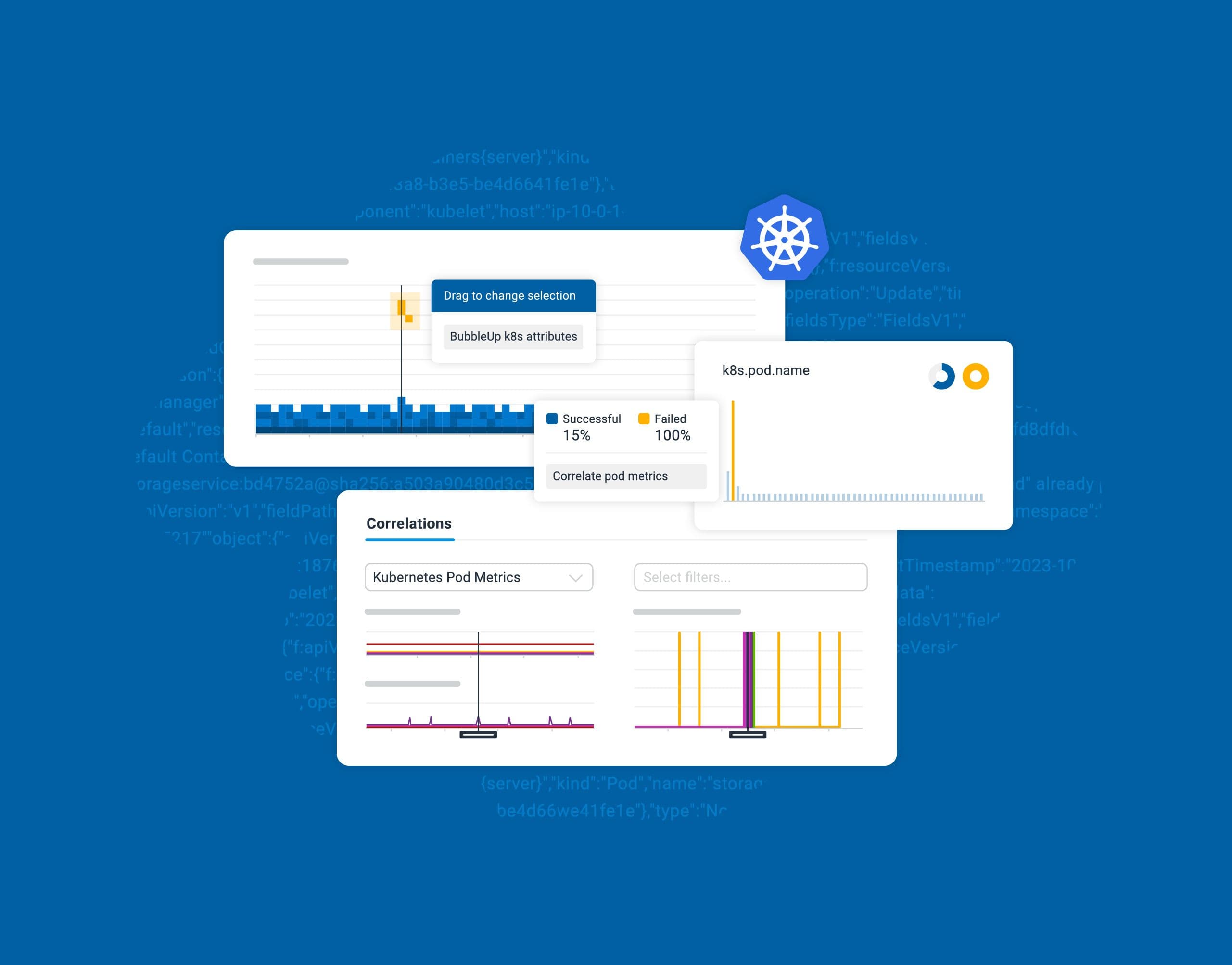
In our continuous journey to support teams grappling with the complexities of Kubernetes environments, we’re thrilled to announce the launch of Honeycomb for Kubernetes, a dedicated solution designed to bridge the growing divide between infrastructure/platform teams and application developers. This is available to all plans (including Free!) at no additional cost.
Get it delivered straight to your inbox.
By subscribing to our newsletter, you agree to Honeycomb’s Terms of Service and Privacy Notice.
Mei Luo
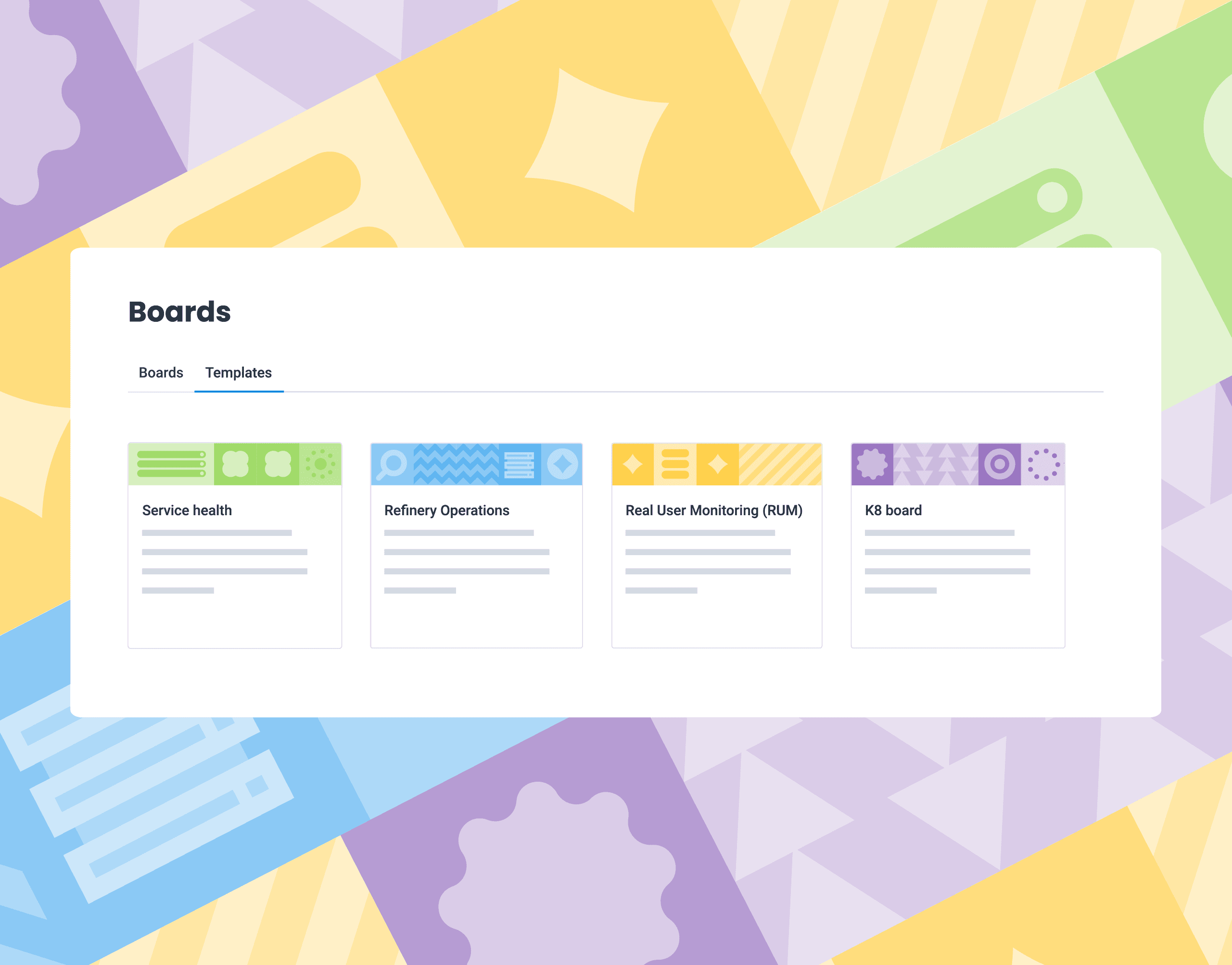
Whether you’re a new Honeycomb user or a seasoned expert looking to uncover fresh insights, chances are you’ve sent tremendous amounts of data into Honeycomb already. The question is: now what? We have the answer: Board templates.
Nick Rycar
You know the old saying, I’m sure: “April deploys bring May joys.” Okay, maybe it doesn’t go exactly like that, but after reading what we’ve been up to for the past month, I think…
Phillip Carter
Engineers know best. No machine or tool will ever match the context and capacity that engineers have to make judgment calls about what a system should or shouldn’t do. We built Honeycomb to augment human intuition, not replace it.
George Miranda
Honeycomb’s Deployment Protection Rule for GitHub Actions quickly enables canary deployments by letting you use Honeycomb query results to prevent deploying to your next target environment.
Spring has sprung, and the bees have been busy. Let’s have a look at what’s new in Honeycomb at the close of March.
It’s been a minute since our last Feature Focus, and we have a bit of catching up to do! I’m happy to report we’ll resume monthly updates next month, but until then, please enjoy this super-sized winter digest of what we’ve been up to at Honeycomb.
Sarrah Vesselov
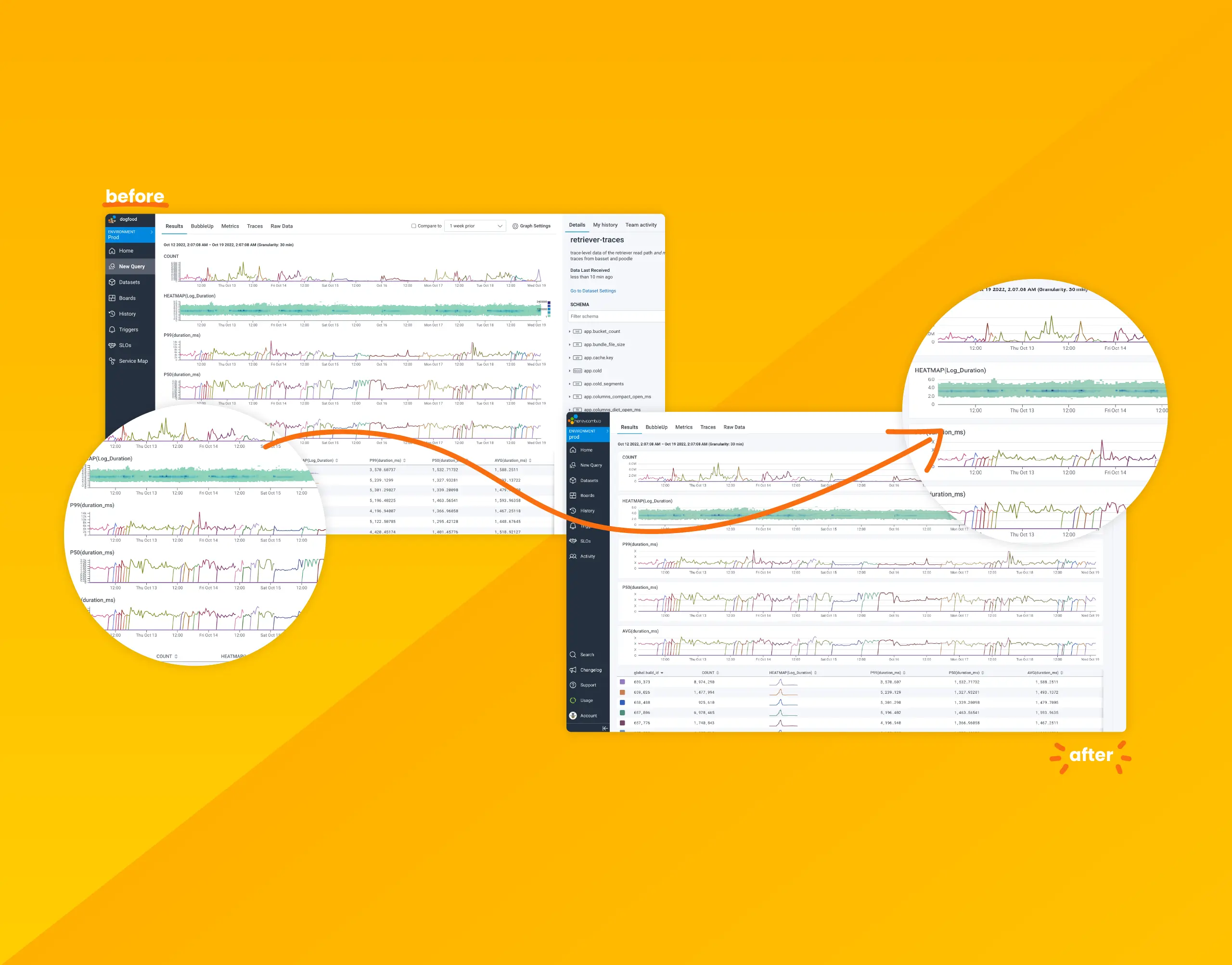
Over the past few months, we’ve been hard at work modernizing Honeycomb’s data visualizations to address consistency issues, confusing displays, access to settings, and to improve their overall look and feel.
Today, we’re announcing the expansion of Honeycomb integrations with various AWS services. This update now covers a much wider swath of AWS services, makes it easier than ever to integrate your AWS stack with Honeycomb, and with our new BubbleUp enhancements, you’ll be identifying and debugging hidden issues in your AWS stack faster than ever.