Honeycomb was built for the AI era. Learn how to futureproof your software for what comes next.
Discover why Honeycomb is the better choice for your engineers, your customers, and your bottom line.
Start your journey with the definitive guide to observability. Download our complimentary ebook.
Bring observability to every software engineer.
Learn about our company, mission and values.
Come for the impact, stay for the culture.
See Honeycomb's latest press releases, media, and more
Learn more about becoming a Honeycomb partner.
Already a Honeycomb customer?
Phillip Carter
We’re in Amsterdam for the week of Kubecon EU. Come by our booth to learn more about how you can gain complete observability into your Kubernetes clusters with Honeycomb and OpenTelemetry. In the meantime, enjoy this OTel update!
Martin Thwaites
Contrary to Betteridge’s Law of Tabloid Headlines, the answer to the question, “does OpenTelemetry in .NET cause performance degradation?” is yes, but context is important. I get this question so often that I thought it was time to get some stats on it.
Nick Rycar
Spring has sprung, and the bees have been busy. Let’s have a look at what’s new in Honeycomb at the close of March.
Christine Yen
The future of observability has never been more exciting, and this latest round ensures we can continue to invest—with conviction—in improving the lives of software engineering teams. We hope this is a moment of welcome change from the soul-crushing headlines plaguing the tech industry these past few months.
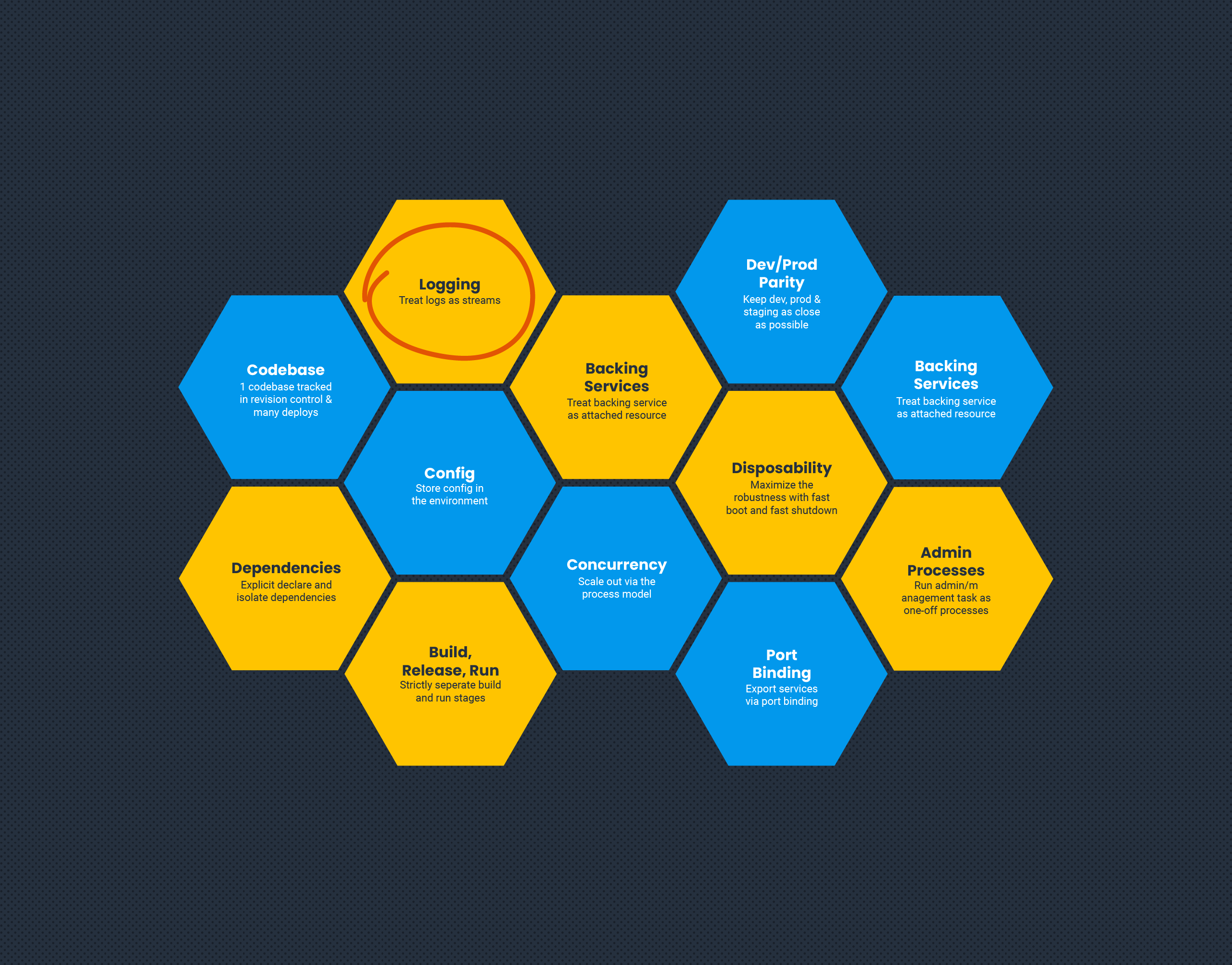
The Twelve-Factor App methodology is a go-to guide for people building microservices. In its time, it presented a step change in how we think about building applications that were built to scale, and be agnostic of their hosting. As applications and hosting have evolved, some of these factors also need to. Specifically, factor 11: Logs.
Dear Miss O11y, I want to make my microservices more observable. Currently, I only have logs. I’ll add metrics soon, but I’m not really sure if there is a set path you follow. Is a guide of some sort, or best practice, like you have to have x kinds of metrics? I just want to know what all possibilities are out there. I am very new to this space.
Fred Hebert
The SRE team is now four engineers and a manager, and we are involved in all sorts of things across the organization, across all sorts of spheres. We are embedded in teams and we handle training, vendor management, capacity planning, cluster updates, tooling, and so on. After growing the team to a point where we could get a better grasp on our mission and identity, we decided to revisit our charter. It is a living document after all, and it was exciting for me to let other folks get their hands in it.
It’s been a minute since our last Feature Focus, and we have a bit of catching up to do! I’m happy to report we’ll resume monthly updates next month, but until then, please enjoy this super-sized winter digest of what we’ve been up to at Honeycomb.
Charity Majors
I’m no stranger to ranting about deploys. But there’s one thing I haven’t sufficiently ranted about yet, which is this: Deploying software is a terrible, horrible, no good, very bad way to go about…
Jessica Kerr (Jessitron)
Your API Key (in the x-honeycomb-team header) tells Honeycomb where to put your data. It specifies a team and an environment. Then, Honeycomb figures out which dataset to put each event in, based on the service.name field in the event. Except…
When we work at it, professionals are pretty good at analysis. We can break down a simple system, look at its parts and their relations, and master it. Given enough time and teammates, we can analyze a very complicated system and fix it when it breaks. But complex systems don’t yield to analysis. We have to add another skill: sense-making.
So you’re used to debugging systems using a distributed trace, but your system is about to introduce a message queue—and that will work the same… right? Unfortunately, in a lot of implementations, this isn’t the case. In this post, we’ll talk about trace propagation (manual and OpenTelemetry), W3C tracing, and also where a trace might start and finish.
Get it delivered straight to your inbox.
By subscribing to our newsletter, you agree to Honeycomb’s Terms of Service and Privacy Notice.
Rebecca Carter
Distributed tracing enables you to monitor and observe requests as they flow through your distributed systems to understand whether these requests are behaving properly. You can compare tiny differences between multiple traces coming through your microservices-based applications every day to pinpoint areas that are affecting performance. As a result, debugging and troubleshooting are simpler and faster. No one has to guess or spend countless hours researching possible causes for issues, like you would if traditional logging methods were your only resource.
When I joined Honeycomb two years ago, we were entering a phase of growth where we could no longer expect to have the time to prevent or fix all issues before things got bad. All the early parts of the system needed to scale, but we would not have the bandwidth to tackle some of them graciously. We’d have to choose some fires to fight, and some to let burn.
Jessica McElroy
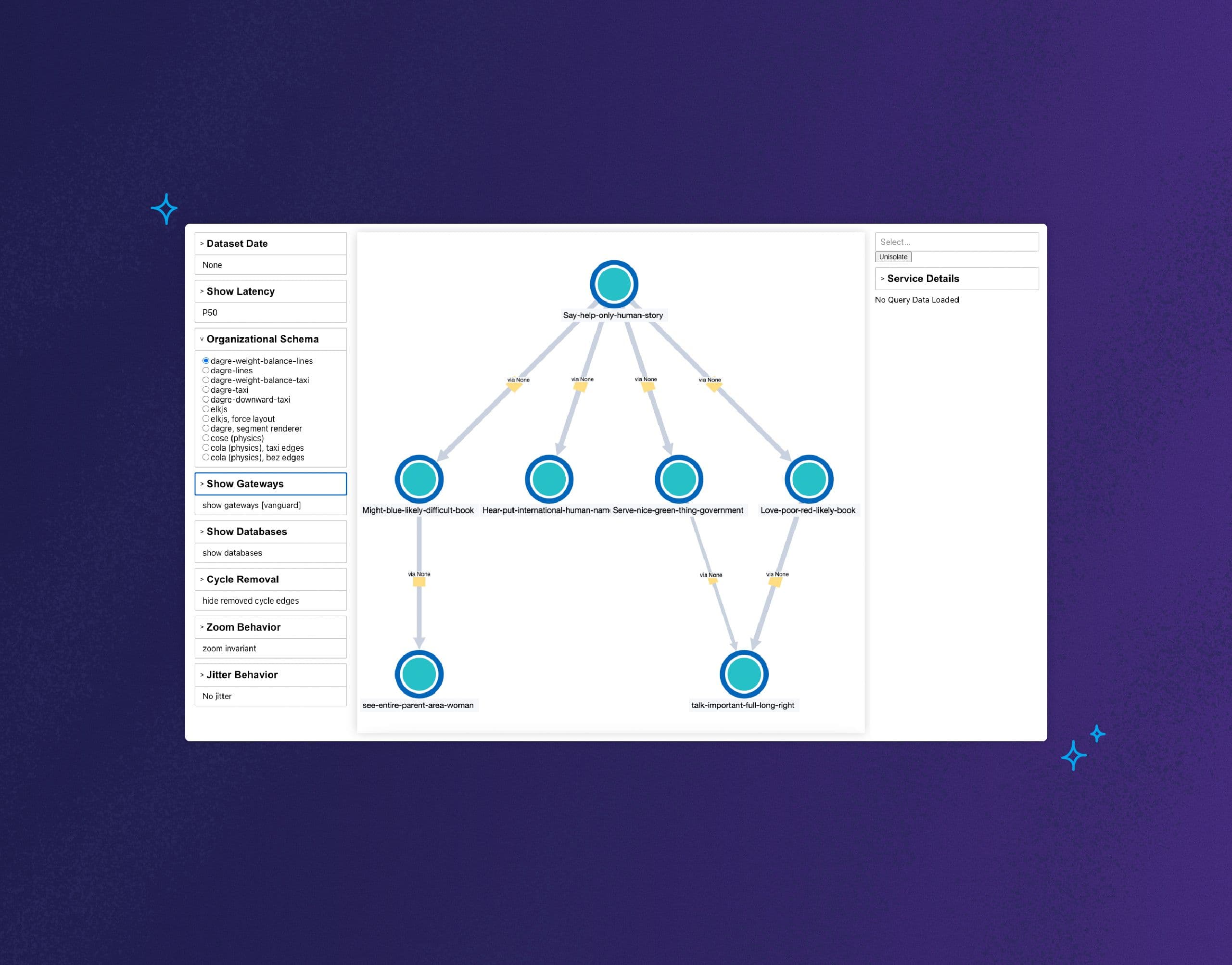
For a long time at Honeycomb, we envisioned using the tracing data you send us to generate a service map. If you’re unfamiliar, a service map is a graph-like visualization of your system architecture that shows all of its components and dependencies. We didn’t want it to be a static service map, though—the kind you’d view once before going “huh, neat”—and then never looking at it again. We wanted to build an actually useful, uniquely Honeycomb-y service map that could become an integral part of your team’s observability workflow.
Alyson van Hardenberg
In January 2022, Honeycomb kicked off a one year experiment to have an employee sit as a voting board member on the board of directors. I became that board member in July 2022. As the experiment comes to a close, I want to share some of my reflections.
Valerie Silverthorne
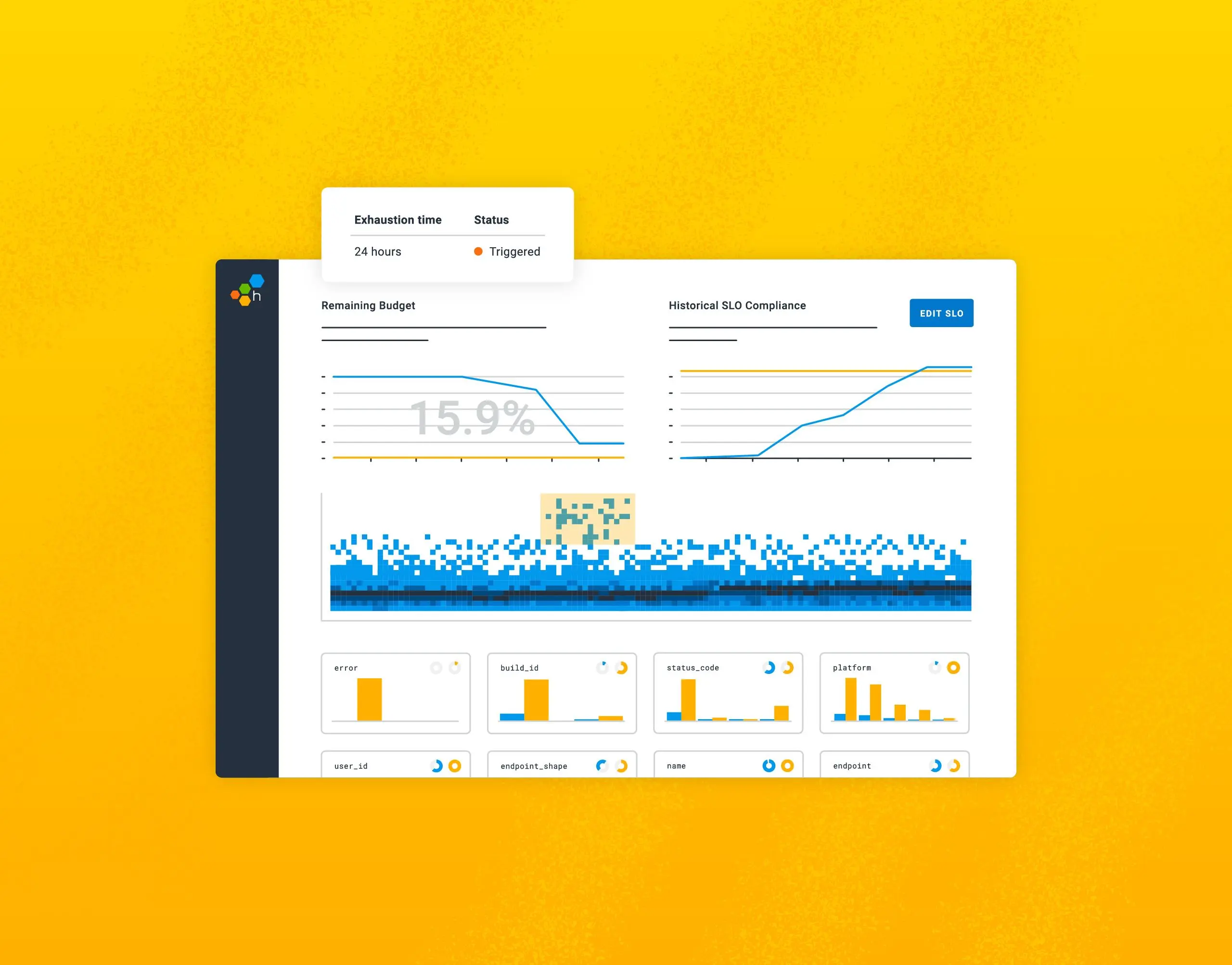
With one key practice, it’s possible to help your engineers sleep more, reduce friction between engineering and management, and simplify your monitoring to save money. No, really. We’re here to make the case that setting service level objectives (SLOs) is the game changer your team has been looking for.
Nick Travaglini
When an organization signs up for Honeycomb at the Enterprise account level, part of their support package is an assigned Technical Customer Success Manager. As one of these TCSMs, part of my responsibilities is helping a central observability team develop a strategy to help their colleagues learn how to make use of the product. At a minimum, this means making sure that they can log in, that relevant data is available, that they receive training on how to query, and perhaps that they collaborate with the rest of Honeycomb’s CS department to solve problems as they arise.
Sarrah Vesselov
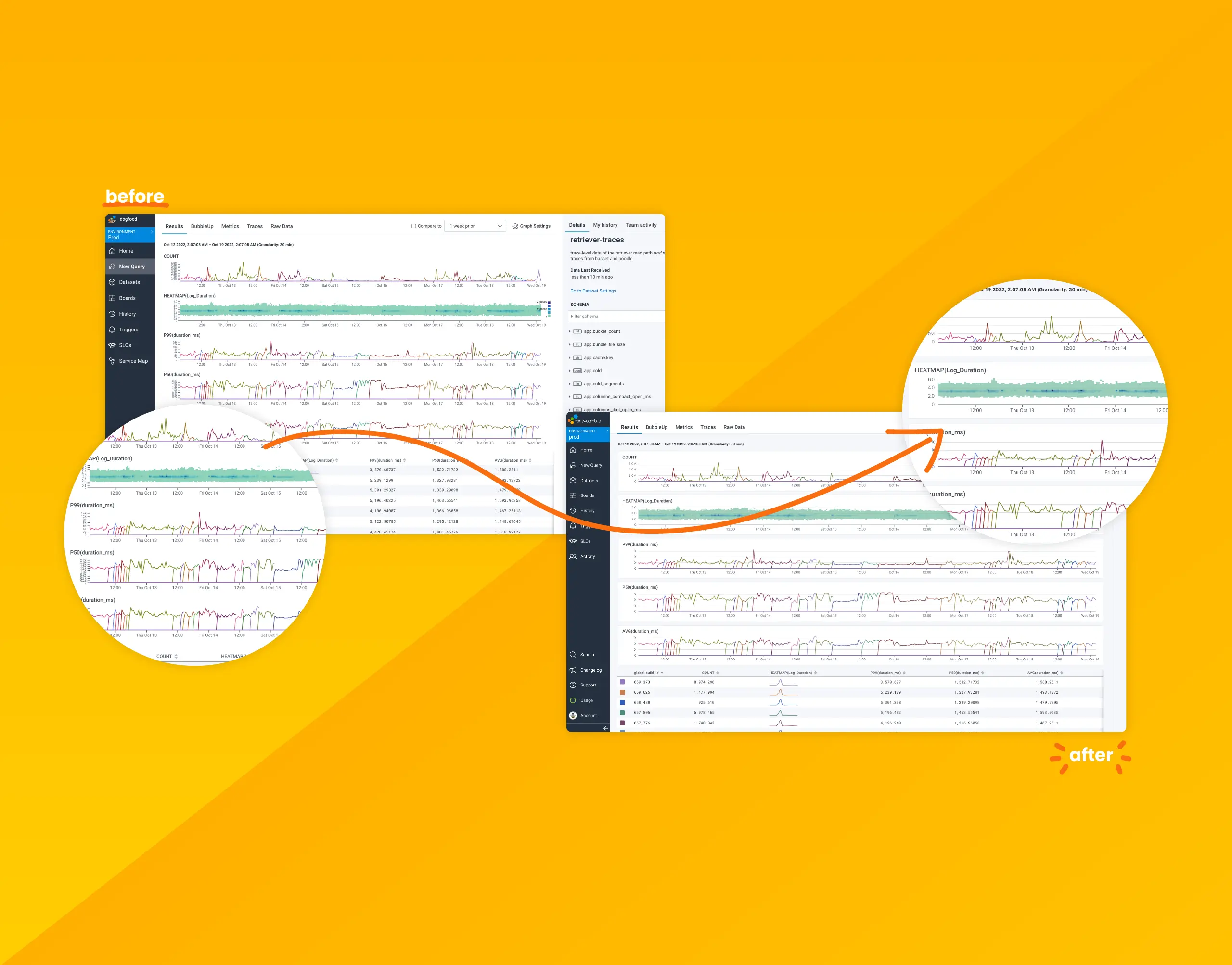
Over the past few months, we’ve been hard at work modernizing Honeycomb’s data visualizations to address consistency issues, confusing displays, access to settings, and to improve their overall look and feel.
Michael Wilde
Incidents happen. What matters is how they’re handled. Most organizations have a strategy in place that starts with log searches—and logs/log searching are great, but log searching is also incredibly time consuming. Today, the goal is to get safer software out the door faster, and that means issues need to be discovered and resolved in the most efficient way possible.