Honeycomb was built for the AI era. Learn how to futureproof your software for what comes next.
Discover why Honeycomb is the better choice for your engineers, your customers, and your bottom line.
Start your journey with the definitive guide to observability. Download our complimentary ebook.
Bring observability to every software engineer.
Learn about our company, mission and values.
Come for the impact, stay for the culture.
See Honeycomb's latest press releases, media, and more
Learn more about becoming a Honeycomb partner.
Already a Honeycomb customer?
Terra Field
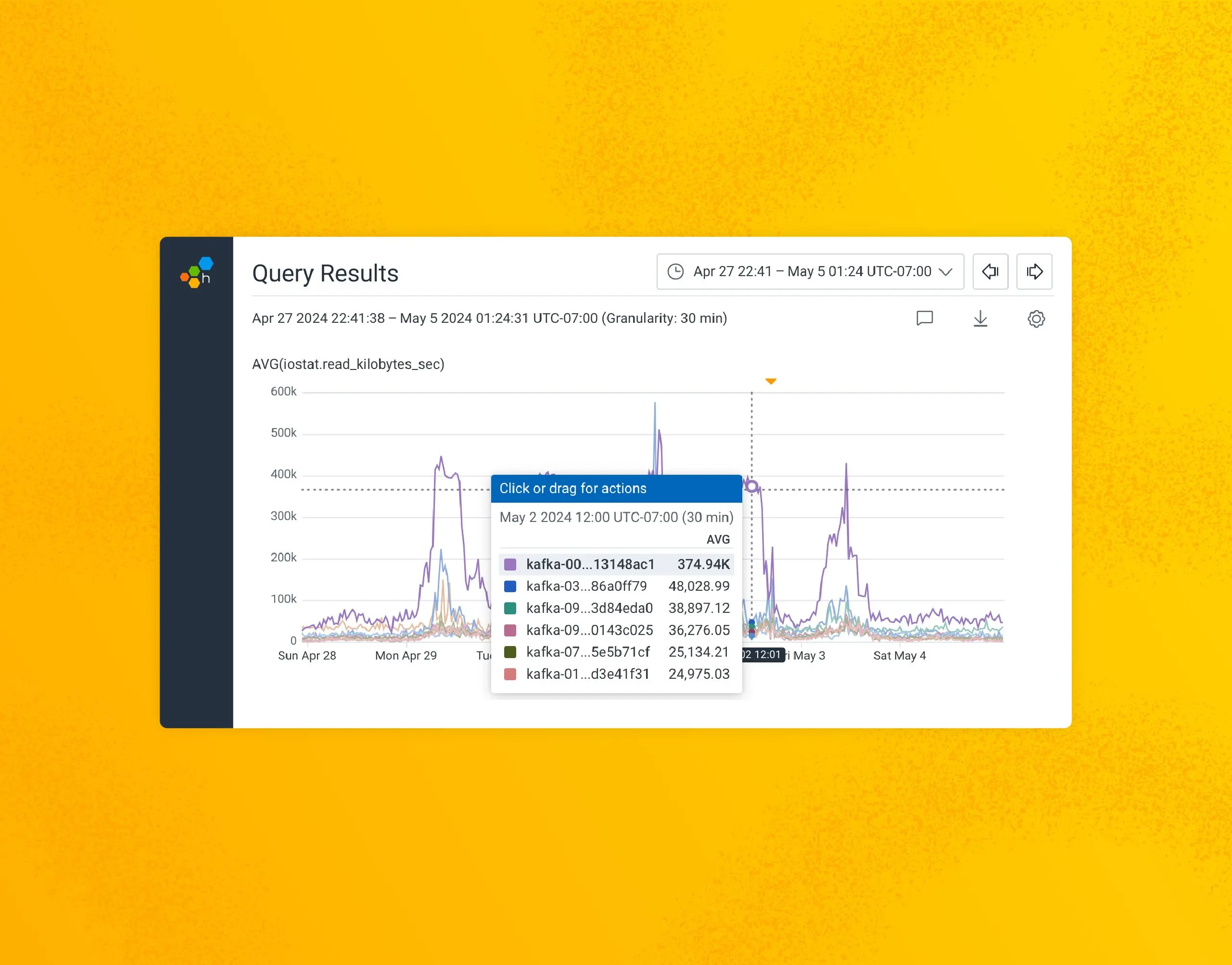
Earlier this year, we upgraded from Confluent Platform 7.0.10 to 7.6.0. While the upgrade went smoothly, there was one thing that was different from previous upgrades: due to changes in the metadata format for Confluent’s Tiered Storage feature, all of our tiered storage metadata files had to be converted to a newer format.
Nick Travaglini
In part one of our CoPE series, we analogized the CoPE with safety departments. David Woods says that those safety departments must be: independent, involved, informed, informative. In this post, we’ll elaborate on what each of those characteristics means, why the CoPE should also match those qualifications, and how to achieve that status.
Hazel Edmands
Our storage engine, affectionately known as Retriever, has served us faithfully since the earliest days of Honeycomb. It’s a tool that writes data to disk and reads it back in a way that’s optimized for the time series-based queries our UI and API makes. As usage of this feature has grown, however, we’ve noticed Retriever creaking in novel ways, pushing us to reconsider a core architectural choice.
Jessica Nunn
Earlier this year, Honeycomb announced the launch of data residency in Europe. To meet the growing needs of our customers in the region, we are delighted to announce new Honeycomb Support business hours.
Software is in a crisis. This is nothing new. Complex distributed systems are perpetually in a state far from equilibrium, operating in what Richard Cook has called a “degraded mode.” It’s through a combination of technical artifacts, organizational practices and policies, and pure gumption that they manage to maintain themselves through time.
Charity Majors
In my February 2024 piece The Cost Crisis in Observability Tooling, I explained why the cost of tools built atop the three pillars of metrics, logs, and traces—observability 1.0 tooling—is not only soaring at a rate many times higher than your traffic increases, but has also become radically disconnected from the value those tools can deliver. Too often, as costs go up, the value you derive from these tools declines.
Rox Williams
Over the past five years, software and systems have become increasingly complex and challenging for teams to understand. Simply understanding what’s broken is difficult enough, but trying to do so while balancing the need to constantly innovate and ship makes the problem worse. Your end users have options, and if your software systems are unreliable, they’ll choose a different one.
Winston Hearn
Recently, Honeycomb released a Web Instrumentation package built around the OpenTelemetry browser JS packages. In this post, I’ll go over what the OpenTelemetry auto-instrumentation package gives you, and what Honeycomb’s distribution adds in order to give you even more insight into your web services.
Josephine Yuan
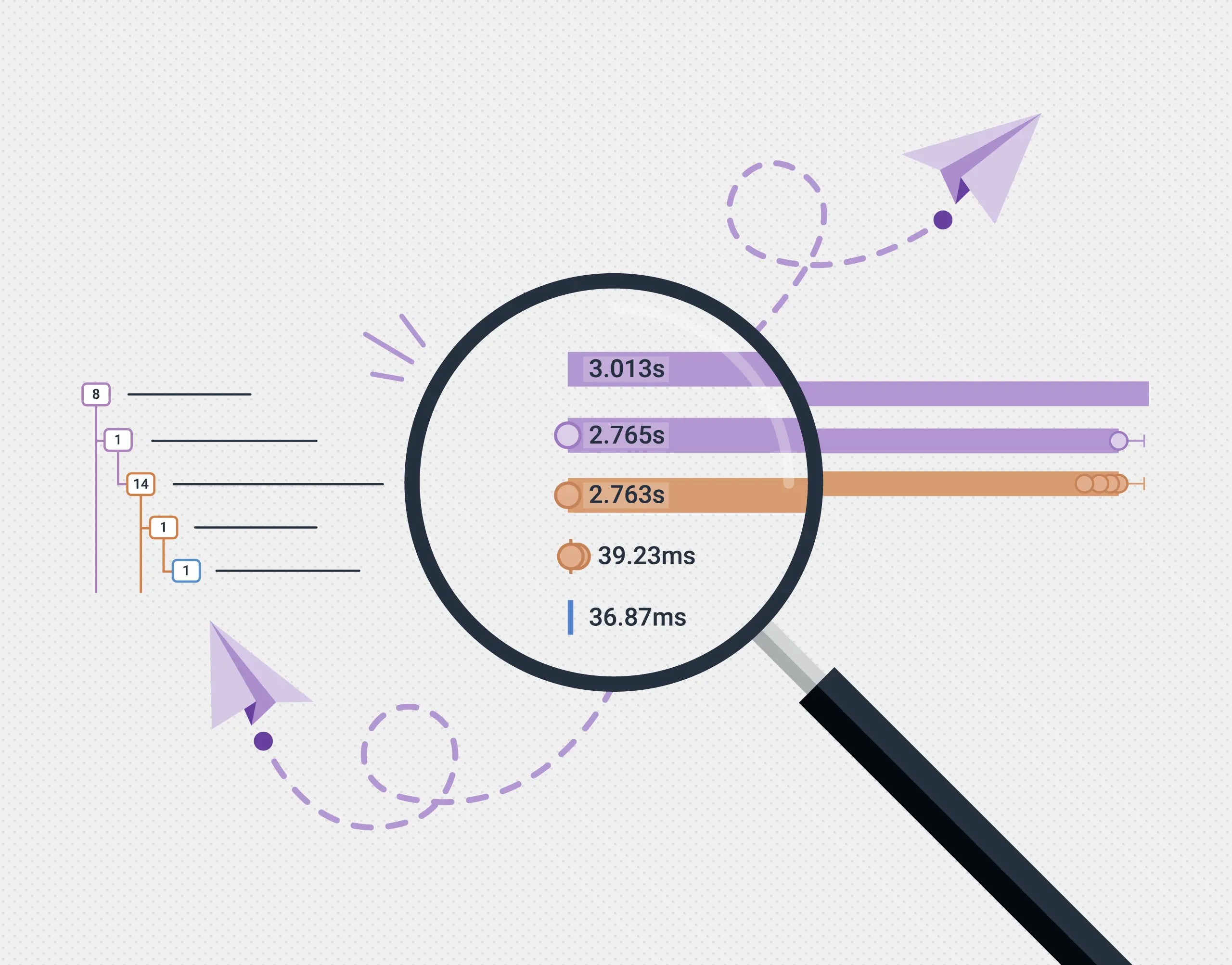
We recently introduced relational fields, a new feature that allows you to query spans based on their relationship to each other within a trace. This post identifies use cases that were previously impossible (or extremely difficult!) without these relational fields.
Honeycomb for Frontend Observability gives frontend developers the ability to quickly identify opportunities for optimization within their web app. This starts with better OpenTelemetry instrumentation, available as an NPM package, that lets you instrument and collect attribution data on Core Web Vitals in under an hour.
Aiden Senner
The 1981 book Simulacra and Simulation by Jean Baudrillard is widely read and cited within academic circles but also permeates popular culture, influencing films, literature, and art. His theories notably influenced the Wachowski siblings’ The Matrix series, bringing some of his ideas into mainstream awareness.
Expanded fields allow you to more easily find interesting traces and learn about the spans within them, saving time for debugging and enabling more curiosity within your team around how transactions perform throughout your services.
Get it delivered straight to your inbox.
By subscribing to our newsletter, you agree to Honeycomb’s Terms of Service and Privacy Notice.
Austin Parker
You’re probably familiar with the concept of real user monitoring (RUM) and how it’s used to monitor websites or mobile applications. If not, here’s the short version: RUM requires telemetry data, which is generated by an SDK that you import into your web or mobile application. These SDKs then hook into the JS runtime, the browser itself, or various system APIs in order to measure performance. These SDKs are usually pretty optimized for both speed and size—you don’t want the dependency that tells you how fast or slow your application is to impact your application speed, after all.
Einar Norðfjörð
This article touches on how we at Birdie handled our transition from logs towards using OpenTelemetry as the primary mechanism for achieving world-class observability of our systems.
Jessica Kerr (Jessitron)
Today at Google Next, Charity Majors demonstrated how to use Honeycomb to find unexpected problems in our generative AI integration. Software components that integrate with AI products like Google’s Gemini are powerful in their ability to surprise us. Nondeterministic behavior means there is no such thing as “fully tested.” Never has there been more of a need for testing in production!
Howard Yoo
A few days ago, I was in a meeting with a prospect who was just starting to try out OpenTelemetry. One of the things that they did was to create an observability demo project which contained an HTTP reverse proxy, a web frontend, three microservices, a database, and a message queue.
Purvi Kanal
In a previous blog post, we outlined how to set up our own auto-instrumentation to send Core Web Vitals data to Honeycomb. We recently released a beta version of an OpenTelemetry wrapper to send traces from the browser to Honeycomb.
There’s a sentence that strikes fear into the heart of every frontend developer I’ve ever met: Users are reporting issues, and we don’t know how to replicate them. What do you do when that happens? Do you cry? Do you mark the issue as wontfix and move on? Personally, I took the road less traveled: gave up frontend engineering and moved into product management (this is not actually accurate but it’s a good joke and it feels truthy).
We thought it’d be fun to give you some insights into what certain teams at Honeycomb do and how they spend their days, and who else would we start this experiment with than our fabulous customer success team? Without further ado, meet four of our bees!
Martin Thwaites
For years, we’ve been installing what vendors have referred to as “agents” that reach into our applications and pull out useful telemetry information from them. From monitoring agents, to full-blown APM tools, this has been the standard for many decades. With OpenTelemetry though, the term “agent” isn’t used as much, and in most scenarios means something slightly different. In this post, we’ll talk about the fact that you can achieve the same “hands off” process with OpenTelemetry, but also when you should and shouldn’t consider using the more automatic approach to telemetry collection.